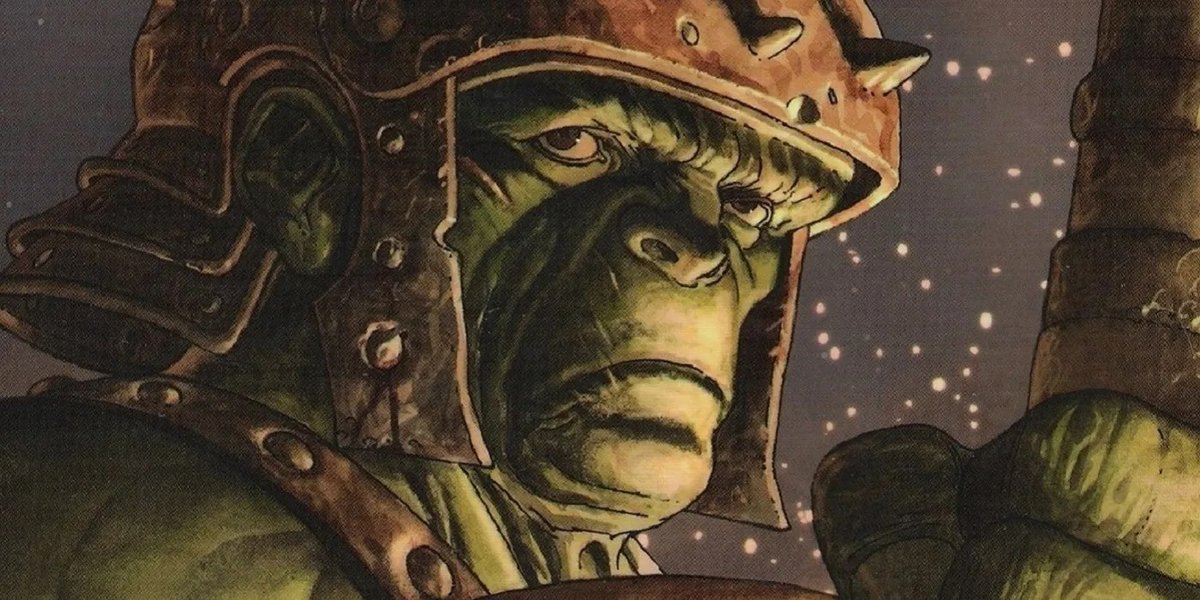
Step into any comic shop, delve into online fan forums, or just glance at the latest blockbuster movie announcements, and you’ll quickly realize that "comic books" encompass a sprawling, multifaceted universe far beyond simple caped crusaders. These vibrant narratives, with their rich visual language, aren't just entertainment; they're cultural touchstones, evolving mirrors reflecting the triumphs and anxieties of society. Understanding the Key Comic Book Storylines & Eras is like grasping the timeline of a living, breathing art form—a journey through distinct periods where trends, themes, and artistic styles shifted dramatically, leaving an indelible mark on our collective imagination.
It’s a tale told in panels, captions, and speech bubbles, charting everything from the birth of the superhero to their gritty deconstruction, and ultimately, their omnipresence in global pop culture.
At a Glance: Your Comic Book History Cheat Sheet
- The Very Beginning: Sequential art existed long before "comic books," with roots dating back centuries.
- Platinum Age (1897-1937): The birth of the "comic book" as reprints of newspaper strips, followed by original pulp-inspired content.
- Golden Age (1938-1947/1956): The explosive debut of Superman, the rise of superheroes fueled by WWII patriotism, and their post-war decline.
- Atomic/Television Age (1948-1955): A dark period marked by the rise of horror and crime comics, public outcry, and the restrictive Comics Code Authority (CCA).
- Silver Age (1956-1969/1970): The triumphant return of the superhero, driven by sci-fi optimism, a surge of creativity at DC and Marvel, and the emergence of flawed, relatable heroes.
- Bronze Age (1970-1984/1985): Comics grow up, tackling social issues like drug abuse and racism, introducing morally ambiguous antiheroes, and shocking readers with permanent character deaths.
- The Modern Age (1985-Present): An umbrella term for recent eras, characterized by:
- Copper/Dark Age (1985-1991): Deconstruction of the hero, psychological depth, and iconic graphic novels.
- Extreme Age (1992-1998): Over-the-top visuals, new independent publishers, and a boom-and-bust collector's market.
- Movie Age (1998-2016): Hollywood's growing influence, where comics become both source material and marketing for blockbusters.
- Why It Matters: These ages provide a crucial framework for understanding character evolution, cultural impact, and the value of comic book collectibles.
Beyond Panels & Pages: The Proto-History of Sequential Art
Before we dive into the defined "ages" of American comic books, it's essential to acknowledge that the art of telling a story through sequential images is ancient. From Egyptian hieroglyphs to medieval tapestries, humans have always used visuals in sequence to convey narratives.
However, the specific precursors to modern comics began taking shape much closer to our time. You might be surprised to learn that as early as 1682, British painter Francis Barlow was utilizing caption boxes, dialogue balloons, and panels in his "A True Narrative of the Horrid Hellish Popish Plot." Fast forward to 1842, and "The Adventures of Obadiah Oldbuck" arrived in America, often cited as the nation's first recorded graphic novel, complete with sequential art. These early examples, alongside a vibrant "proto age" of international and Victorian sequential imagery predating 1897, laid the critical groundwork for the medium's explosion.
The Dawn of the Printed Narrative: Platinum Age (1897-1937)
The true birth of the American comic book as a distinct commercial product arrived in 1897 with "The Yellow Kid," a reprint of a popular newspaper strip, explicitly labeled as a "comic book." This marked the beginning of the Platinum Age, a four-decade period defined by experimentation and a desperate search for profitability.
Initially, publishers tried to capitalize on the success of syndicated newspaper strips by reprinting them in book form. This strategy was often costly due to expensive licensing fees. This commercial pressure eventually led to publishers seeking cheaper alternatives: hiring new, younger artists and writers to create original pulp-inspired comics. While many attempts at profitability met with varying success, this era saw foundational steps, like the 1911 reprint of the "Mutt and Jeff" newspaper strip, and culminated with "Detective Comics 1" in 1937, offering short stories clearly drawing inspiration from the popular pulp magazines of the day. This creative churn set the stage for something truly revolutionary.
Heroes Emerge, Wars Rage: The Golden Age (1938-1947/1956)
If the Platinum Age was the birth of the comic book, the Golden Age was the birth of the superhero, and with it, an industry. Everything changed in 1938 with the debut of "Action Comics 1" and the first appearance of Superman. Drawing inspiration from mythical heroes, sci-fi adventurers like John Carter, pulp figures like Doc Savage, and even literary strongmen like Philip Wylie’s Gladiator, Superman's mission to defend the weak resonated profoundly with a nation grappling with the Great Depression.
His unprecedented success triggered an explosion of "me-too" characters, leading to the rapid creation of iconic figures like Batman ("Detective Comics 27," 1939), Wonder Woman ("All Star Comics 8," 1941), and Captain America ("Captain America Comics 1," 1941).
In the years leading up to World War II (1938-1941), heroes like Superman and Batman often acted as vengeful anti-heroes, reflecting the raw, visceral desire for justice prevalent in Depression-era pulp fiction. However, with America's entry into WWII, a pivotal shift occurred. An editorial edict from Whitney Ellsworth at DC Comics in 1941 pushed for more family-friendly content, aligning with a wave of patriotism. Superheroes became symbols of American ideals, wholesome and undeniably popular. Captain America famously punched Adolf Hitler on the cover of his 1941 debut, solidifying comics' role in the war effort.
But as with all wartime booms, a bust followed. After WWII, soldier interests shifted, and superhero popularity waned dramatically in the late 1940s. Comic books pivoted, transitioning to non-superhero genres like Westerns, Romance, and Horror to retain readership. For instance, "All American Comics 102" (1948) phased out Green Lantern and rebranded as "All American Western 103." Similarly, books featuring the Human Torch and Captain America were either renamed or replaced with horror material by 1949, signaling the end of the superhero's first reign.
From Superheroes to Scares: The Atomic & Television Age (1948-1955)
The waning superhero trend birthed a fascinating, albeit controversial, period known as the Atomic or Television Age. By 1951, most superhero books were discontinued. Mainstream comics pivoted dramatically to genres like Romance, Crime, Westerns, Suspense, Science Fiction, War, Satire, and especially Horror. The "Television Age" moniker arose as many comics mirrored the genres finding popularity on television, which was rapidly gaining household penetration in the early 1950s.
This era, however, was defined by one major factor: controversy. The graphic nature of many Crime and Horror comics, often featuring gruesome covers and violent storylines, sparked widespread public concern. Mothers, politicians, and child psychologists began to voice alarm, fearing the negative influence of these comics on juvenile delinquency. EC Comics, under the helm of publisher Bill Gaines, became a prominent, and often targeted, example for its highly popular horror titles.
The backlash intensified, culminating in accusations from Dr. Fredric Wertham, who linked comics directly to juvenile delinquency in his book "Seduction of the Innocent." This led to congressional oversight by Senator Estes Kefauver's subcommittee. The result was the formation of the self-regulatory Comics Code Authority (CCA) in 1954. The CCA imposed strict rules, narrowing creative possibilities and ushering in a period of stagnation. Bill Gaines famously discontinued his popular EC Horror comics, though he successfully continued "Mad" as a magazine, shifting its format to avoid CCA oversight. The stage was set for another major change.
The Resurgence: Silver Age (1956-1969/1970)
The industry seemed stuck, creatively stifled by the CCA. But in 1956, a spark ignited a new era: the Silver Age. "Showcase 4" introduced a modernized Barry Allen as The Flash, reimagined by Carmine Infantino, Julius Schwartz, and Robert Kanigher. This fresh, optimistic take on the superhero, infused with science fiction elements, revitalized the genre.
The template for new heroes became clear: an average person gaining incredible powers through a bizarre scientific event. Under the CCA's watchful eye, DC Comics focused on kid-friendly content, often relying on "retcons" (retroactive continuity changes) to update existing characters, such as Aquaman's origin changing in 1959. Key DC creations followed, including Hal Jordan's Green Lantern ("Showcase 22," 1959, by Gil Kane and John Broome), who wielded a sci-fi power ring. The formation of the "Justice League of America" in 1960 further solidified DC's leadership in this new superhero boom.
Prompted by DC's success, Martin Goodman tasked Stan Lee to create a similar team for Marvel Comics. The result, with the incredible artistry of Jack Kirby, was the groundbreaking Fantastic Four #1 in 1961. This team of astronauts gaining powers from a cosmic ray event captured the era's optimism about science and space exploration. Unlike DC's more god-like figures, Marvel heroes, especially under Stan Lee's distinctive voice, were known for their human flaws and relatable problems. Characters like the bickering Fantastic Four, the guilt-ridden Spider-Man ("Amazing Fantasy 15," 1962, with Steve Ditko), and the feared outcasts of the X-Men (1963) resonated deeply with readers.
This era was profoundly optimistic about science and the future, aligning perfectly with the "age of the astronaut," witnessing milestones like Alan Shephard's spaceflight in 1961, John Glenn's orbit in 1962, and Neil Armstrong's moon landing in 1969. While the CCA still enforced a generally campy and lighthearted tone, by 1969, both DC and Marvel had built vast mythologies around their sci-fi-origin heroes, fundamentally reshaping the comic book landscape. This period cemented the archetypes that would define superheroes for decades. Characters like the Fantastic Four became pillars of the comic book universe, their adventures often mirroring the public's fascination with space and science.
Gritty Realism & Shifting Morals: The Bronze Age (1970-1984/1985)
As the 1960s faded, giving way to an era marked by social unrest, the Vietnam War, and the Civil Rights movement, the innocent optimism of the Silver Age began to crumble. The Bronze Age, starting around 1970, reflected this loss of innocence, ushering in a period of increased social relevance and darker themes.
Writers and artists, influenced by the turbulent times, began to tackle real-world issues. Landmark storylines like Dennis O’Neil and Neal Adams' "Green Lantern/Green Arrow 76" (1971) explicitly confronted drug abuse, racism, and poverty—issues once deemed taboo by the CCA, whose influence was now perceptibly waning. Chris Claremont's epic run on "Uncanny X-Men," beginning in 1975, masterfully used the mutant metaphor to explore themes of prejudice and civil rights, becoming one of the most enduring and beloved sagas in comic history.
This age also saw the rise of the antihero. "Conan 1" (1970, Roy Thomas, Barry Windsor-Smith) is often cited as a key starting point, introducing a violent, animalistic "Hyborian Tarzan" whose morally gray actions resonated with readers amidst societal tragedies like the Kent State Massacre. This paved the way for characters like the Punisher (1974) and Wolverine ("Hulk 181," 1974), who were not afraid to use lethal force, challenging the traditional heroic ideal.
Perhaps the most shocking event of the era, which underscored this shift, was "The Night Gwen Stacy Died" ("Amazing Spider-Man #121-122," 1973). The death of a beloved main character, at the hands of a villain and with a hero unable to save her, demonstrated that even the most cherished figures were no longer safe. This moment profoundly impacted readers and signaled a new era where consequences felt real and stakes were higher.
Deconstruction & Disillusionment: The Modern Age (1985-Present)
The Modern Age is a broad classification, typically considered to begin in the mid-1980s and continuing to the present day. It's a complex, multifaceted era that encompasses several distinct sub-periods, each reflecting unique industry trends and cultural shifts. It's an age defined by the deconstruction of the superhero archetype, the rise of independent creators, and the ever-growing influence of other media, particularly film.
The Dark Turn: Copper/Dark Age (1985-1991)
Beginning around 1985, this sub-era was influenced heavily by the growth of the direct market—comic shops that circumvented traditional newsstands—and the rise of independent publishers. This new distribution model meant creators could publish darker, more psychologically complex stories without requiring the often-limiting CCA approval.
Major companies like DC and Marvel responded by deconstructing their flagship heroes. Landmark works like Marv Wolfman and George Perez's "Crisis on Infinite Earths" (1985) rebooted an entire universe, while Frank Miller's "Batman: The Dark Knight Returns" (1986) and Alan Moore and Dave Gibbons' "Watchmen" (1986) offered cynical, mature takes on superheroes, exploring their psychological and political implications. These stories were often self-aware, examining heroes who found dysfunctional enjoyment in their roles, perhaps critiquing the deregulation and greed prevalent in 1980s society. Examples abound: Lobo emerged as an unapologetic anti-hero, Hank Pym infamously struck the Wasp, and even Superman's updated origins in 1988 (by John Byrne) saw him kill Kryptonian villains, a stark departure from his Golden Age idealism.
Excess & Explosion: The Extreme Age (1992-1998)
The early 1990s brought the Extreme Age, a period heavily influenced by blockbuster action films featuring muscular figures like Schwarzenegger and Van Damme. The aesthetic was defined by over-the-top, exaggerated visuals: ridiculously muscular male and female characters, often adorned with tights, shoulder pads, an absurd amount of guns, and ammo.
This era was characterized by stylistic, sensational multi-issue crossover storylines, visual gimmicks (die-cut, hologram covers), and swimsuit specials aimed squarely at a booming collector's market. Plot and basic anatomy often took secondary importance to visual spectacle. Rob Liefeld's "X-Force 1" (1991) heralded this trend, and Liefeld, along with other superstar artists, famously left Marvel to form Image Comics, publishing titles like "Youngblood 1." DC Comics also joined in with their own sensational events, most notably the "Death of Superman" story arc (1992-1993). However, this type of storytelling, driven by speculation rather than substance, eventually led to a "speculator boom and bust," leaving many collectors with valueless comics and leading to widespread consumer fatigue by the late 1990s.
Hollywood's Shadow: The Movie Age (1998-2016)
The late 1990s saw a new force emerge: Hollywood. The Movie Age, typically starting with "Blade" in 1998 (the first successful Marvel film adaptation), dramatically reshaped the comic book industry. The success of films like "X-Men" (2000) and the subsequent deluge of comic book movies created a symbiotic, often complicated, relationship between the two mediums.
This era is characterized by a phenomenon of "corporate synergy," where comics increasingly became source material for movies, and then the movies, in turn, became source material for the comics themselves. This led to a perceived "recycled undertaking," where comic book storylines and character designs were often filtered or reflected by their cinematic counterparts. The ubiquity of the Marvel Cinematic Universe (MCU) and streaming services has only intensified this dynamic, meaning contemporary comics are often viewed, interpreted, and even created through the lens of their big-screen adaptations. This ongoing feedback loop continues to define much of the industry's direction today. The influence is undeniable, with beloved characters like the Fantastic Four regularly seeing their comic narratives echo or influence potential film appearances.
Beyond the Ages: Nuances & What's Next
While these age classifications provide an invaluable framework for understanding the evolution of American superhero comics, it's crucial to acknowledge their limitations. This system primarily focuses on mainstream superhero narratives and doesn't fully address the rich history of comic newspaper strips, romance comics, international comics, independent comics, underground comics, and other vital genres. The comic book world is far broader and more diverse than this singular timeline can capture.
Furthermore, the "Modern Age" is a subject of ongoing debate among historians and fans. Given its long duration, many argue that it has already given way to new sub-eras like the "Plastic Age," "Digital Age," or a distinct "Cinematic Age," especially considering the unprecedented dominance of the MCU and streaming platforms. This debate itself highlights the dynamic, ever-evolving nature of the medium.
Why These Ages Matter to You
Understanding the Key Comic Book Storylines & Eras isn't just an academic exercise; it's a vital tool for anyone who loves the medium.
- For the Fan: It deepens your appreciation for the stories you read. You'll see how characters have evolved, how recurring themes have been reinterpreted, and how external cultural events have shaped your favorite heroes and villains. You can trace the journey of iconic teams, such as the Fantastic Four, from their optimistic Silver Age origins to their modern-day complexities.
- For the Collector: This framework is essential for valuing vintage comics. Knowing which age a comic belongs to, its historical context, and its significance within that era can dramatically impact its collectibility and monetary value. Early appearances of key Silver Age heroes, for example, often command premium prices.
- For the Aspiring Creator: Studying these ages provides invaluable lessons in storytelling, character development, and adapting to cultural shifts. It teaches you what resonates with audiences across different generations and how to innovate within established genres.
- For the Cultural Observer: Comic books are reflections of society. By understanding their evolution through these ages, you gain unique insights into American history, sociology, and shifting moral landscapes.
Ultimately, delving into these distinct periods provides a profound sense of the medium's journey—a testament to its resilience, adaptability, and enduring power to entertain, inspire, and provoke thought. So next time you pick up a comic, take a moment to consider its place in this incredible, ongoing story.