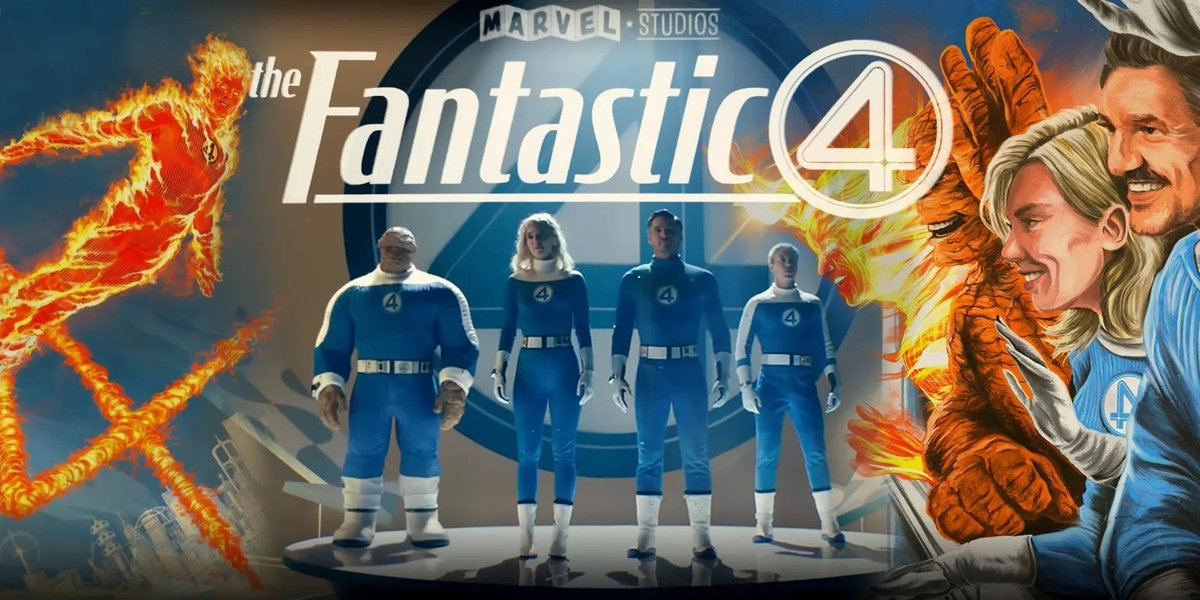
In the bustling, sometimes bewildering world of 1960s comic books, something genuinely groundbreaking happened. A quartet of adventurers—a brilliant scientist, his girlfriend, her younger brother, and his best friend—took to the stars, only to return irrevocably changed, ushering in what would become known as the Marvel Age of Comics. This wasn't just another superhero team; this was a family, with all the squabbles, love, and extraordinary feats that entails. Understanding The Fantastic Four's Origin & Early Lore isn't just a dive into a classic comic; it's an exploration of how modern superhero storytelling was born.
They were flawed, they argued, they worried about bills, and they never bothered with secret identities. They were, in short, human—despite their incredible powers. This commitment to realism and character development, alongside a boundless sense of cosmic adventure, set the Fantastic Four apart from their Golden Age predecessors and cemented their place as cornerstones of the Marvel Universe.
At a Glance: What Makes Marvel's First Family So Fantastic?
- Birth of an Era: Created by Stan Lee and Jack Kirby in 1961, they launched the Marvel Comics as we know it.
- A Family, Not Just a Team: No secret identities, just a public, bickering, loving family of adventurers.
- Cosmic Catastrophe: An experimental space flight through cosmic radiation granted them incredible, often burdensome, powers.
- Relatable Heroes: They dealt with personal struggles, financial woes, and the weight of their transformations, making them deeply human.
- Pioneers of Exploration: Their stories blended sci-fi, cosmic adventure, and exploration, rather than just street-level crime-fighting.
- Iconic Villains: Introduced legendary foes like Doctor Doom, Galactus, and the Silver Surfer, shaping the Marvel cosmos.
- Lasting Legacy: Influenced countless comics, animated series, films, and even inspired real-world interest in science and space.
The Cosmic Genesis: How Marvel's First Family Was Born
Before the Fantastic Four, superheroes often felt like unreachable gods, paragons of virtue who always did the right thing without internal conflict. But the early 1960s saw a shift in cultural mood, and with it, a demand for stories that mirrored the complexities of the real world. Enter Stan Lee, Marvel's visionary writer, and Jack Kirby, the unparalleled "King" of comic art. In 1961, they were tasked with creating a new team, something different. Lee famously wanted heroes who felt "real," who had flaws and personal problems alongside their incredible abilities. Kirby, a master of dynamic action and grand-scale sci-fi, provided the visual flair and the larger-than-life scenarios.
Together, Lee and Kirby crafted the Fantastic Four not as a team, but as a family—a concept utterly revolutionary for the time. They squabbled, they fell in love, they got frustrated with each other, and they were always, unequivocally, a unit. This focus on family dynamics over masked heroics became the bedrock of their appeal and fundamentally redefined what a superhero comic could be. It was a bold move that paid off, capturing the imagination of readers eager for something more substantial than simple good-vs-evil narratives.
The Fateful Voyage: From Scientists to Superhumans
The origin story of the Fantastic Four is as iconic as it is simple, yet it holds profound implications for their character and future adventures. Driven by a thirst for scientific discovery and a desire to beat rival nations to space, brilliant scientist Reed Richards prepared for an unauthorized spaceflight. Accompanying him were his girlfriend Susan Storm, her impulsive younger brother Johnny Storm, and Reed's best friend, the gruff but good-hearted pilot Ben Grimm.
Their experimental rocket, hastily constructed, lacked sufficient shielding. As they pierced the Earth's atmosphere and ventured into space, their vessel was bombarded by an unexpected and intense burst of cosmic radiation. The radiation tore through the ship and their bodies, altering their genetic structures in unimaginable ways. Against all odds, they managed to crash-land back on Earth, only to discover they were no longer ordinary humans. The cosmic rays had rewritten their very being, granting them powers that would both define and challenge their lives. This moment, a terrifying accident of scientific ambition, became the crucible in which Marvel's first family was forged.
Meet the Fantastic Four: Powers, Personalities, and Humanity
The transformation wasn't uniform; each member reacted to the cosmic radiation differently, gaining unique abilities that perfectly complemented (and sometimes clashed with) their pre-existing personalities.
Mr. Fantastic (Reed Richards): The Elastic Innovator
The brilliant, often absent-minded, scientific genius Reed Richards found his body able to stretch, contort, and re-shape itself into any form imaginable. He became Mr. Fantastic. More than just a man with elastic limbs, Reed is the undisputed intellectual leader of the team, capable of solving nearly any scientific riddle or engineering challenge. His stretching powers, while visually impressive, often serve as a metaphor for his adaptable mind, always reaching for new solutions. Yet, his devotion to science can sometimes overshadow his emotional connections, creating friction within the family he holds so dear.
Invisible Woman (Susan Storm): The Unseen Protector
Susan Storm, Reed's girlfriend and later wife, gained the power to render herself invisible. Initially, this was her primary ability, leading to her moniker, the Invisible Girl (later evolving to Invisible Woman as her powers and character matured). Crucially, she also developed the ability to generate incredibly powerful, invisible force fields, which she can manipulate for defensive shields, offensive blasts, or even as platforms. Sue is undeniably the "heart" of the team, often mediating disputes and providing the emotional anchor for the family. Her powers, particularly the force fields, are arguably the most versatile and potent, reflecting her inner strength and protective nature. She would go on to marry Reed and become a mother to their extraordinary children, Franklin and Valeria, further solidifying the family aspect.
Human Torch (Johnny Storm): The Fiery Daredevil
The youngest member, Johnny Storm, Sue's energetic and often hot-headed brother, experienced the most dramatic visual transformation. He could burst into flames, fly, and project fireballs from his hands. He became the Human Torch, a name evoking the Golden Age hero who inspired him (though a completely different character). Johnny is the team's daredevil, always ready for action, a bit of a show-off, and constantly testing the limits of his powers. His youthful exuberance and tendency to playfully annoy Ben Grimm often provide much-needed levity to their serious scientific expeditions and battles.
The Thing (Ben Grimm): The Clobberin' Heart
Perhaps the most tragic and yet most beloved transformation befell Ben Grimm. The cosmic rays encased his body in a thick, orange, rock-like hide, granting him immense superhuman strength and durability. He became The Thing, forever exclaiming his iconic battle cry, "It's clobberin' time!" Ben's struggle with his grotesque appearance, the loss of his "normal" life, and his yearning for a cure became one of the most poignant and enduring themes of the series. Despite his tough exterior and grumpy demeanor, Ben possesses an enormous heart, fiercely loyal to his friends and family. His journey from self-pity to heroic acceptance, eventually finding love with the blind sculptress Alicia Masters (and later adopting children), is a testament to the series' humanistic approach.
Beyond the Mask: Why Secret Identities Didn't Matter
One of the most revolutionary aspects of The Fantastic Four, a truly defining element of The Fantastic Four's Origin & Early Lore, was their blatant disregard for secret identities. While Superman had Clark Kent and Batman had Bruce Wayne, the Fantastic Four lived openly as themselves. Reed Richards was Mr. Fantastic, Susan Storm was the Invisible Woman, and so on. They didn't hide their faces or their origins. This wasn't an oversight; it was a deliberate choice by Lee and Kirby to ground the team in realism and make them relatable.
This public existence meant their personal lives were intertwined with their superheroics. Their headquarters, the Baxter Building in New York City, wasn't a hidden fortress but a publicly known skyscraper. They dealt with fan mail, public scrutiny, and the very real consequences of their actions in the public eye. This approach underscored their family dynamic—they weren't just colleagues, but individuals sharing an extraordinary life, for better or worse. It allowed for richer character development, as their public personas were simply extensions of their private selves, making their struggles and triumphs all the more impactful. If you're looking to Explore the Fantastic Four further, their unique public presence is a crucial aspect to understand.
Their Earliest Adversaries: A Rogues' Gallery for the Ages
The Fantastic Four didn't just break the mold with their heroes; they also introduced some of the most enduring and complex villains in comic book history. Their early adventures laid the groundwork for the sprawling Marvel Universe, proving that superhero stories could be about much more than stopping bank robbers.
The Mole Man: Marvel's First Villain
Their very first foe, introduced in Fantastic Four #1 (1961), was the Mole Man. A grotesque, subterranean monarch ruling over monster-filled lands beneath the Earth's surface, the Mole Man represented the unknown and the bizarre. His initial plot to conquer the surface world by disrupting major power plants was a perfect, contained threat for the newly formed team, allowing them to showcase their powers and nascent teamwork against a monstrous, yet surprisingly sympathetic, antagonist. He was a memorable debut, hinting at the strange worlds awaiting the FF.
Doctor Doom: The Ultimate Rival
Arguably the greatest supervillain in all of Marvel Comics, Doctor Doom made his chilling debut in Fantastic Four #5 (1962). Victor Von Doom, the brilliant, scarred, and iron-masked monarch of Latveria, quickly established himself as Reed Richards' intellectual equal and personal nemesis. Doom's origin, tied directly to Reed from their college days, explains his burning jealousy and desire to prove his superiority. He's not just a conqueror; he's a sorcerer, a scientist, and a ruler driven by a distorted sense of honor and a bottomless ego. Their rivalry isn't merely physical; it's a clash of ideologies and intellects, making Doom a multifaceted and truly terrifying adversary who believes he alone can save the world by ruling it.
Galactus and the Silver Surfer: Cosmic Scale Redefined
In one of Marvel's most ambitious and impactful storylines, Fantastic Four #48-50 (1966), Lee and Kirby introduced Galactus, the Devourer of Worlds, and his herald, the Silver Surfer. This saga wasn't about saving a city; it was about saving Earth itself from a cosmic entity whose existence transcended morality as humans understood it. Galactus consumed planets for sustenance, a force of nature rather than pure evil. The Silver Surfer, a noble alien enslaved to Galactus, was torn between his master's will and the vibrant life on Earth. This storyline vastly expanded the scope of the Marvel Universe, proving that superhero comics could tackle philosophical themes and grand cosmic sagas, fundamentally altering what readers expected from the genre.
Kang the Conqueror and Beyond
The early years also saw the introduction of other memorable foes, such as the time-traveling despot Kang the Conqueror, the shape-shifting Skrulls (who introduced concepts of alien invasion and infiltration), and the mystical Miracle Man. These early encounters established the Fantastic Four not just as Earth-bound heroes, but as cosmic explorers, scientists, and guardians facing threats from across the galaxy and through time itself.
The Fantastic Four's Enduring Legacy: More Than Just Comics
The impact of the Fantastic Four extends far beyond the pages of their comic books. Their revolutionary approach to character, storytelling, and world-building left an indelible mark on popular culture and the very fabric of superhero narratives.
They inspired countless young readers to look to the stars and delve into the wonders of science. Reed Richards, a hero whose greatest power was his intellect, served as a powerful role model for scientific curiosity and problem-solving. Their adventures were often rooted in scientific principles (however fantastical), making the idea of space exploration and technological advancement exciting and accessible.
Their influence can be seen in numerous other media. They've been featured in multiple animated series, from the 1967 Hanna-Barbera show to the critically acclaimed 1994 series and the 2006 iteration. While live-action film adaptations have had a mixed reception (the 2005 and 2007 films, and the 2015 reboot), their cultural presence remains strong. Stories like Pixar's The Incredibles openly draw inspiration from the concept of a superhero family navigating domestic life alongside world-saving duties. Even shows like Ben 10, with its transformations and young hero dynamics, carry echoes of the FF's adventurous spirit.
Currently, Marvel Studios is developing a new Fantastic Four movie, poised to finally integrate Marvel's First Family into the sprawling Marvel Cinematic Universe (MCU). This highly anticipated entry signifies their continued relevance and importance, promising to introduce their unique blend of scientific exploration, cosmic adventure, and heartfelt family drama to a new generation of global audiences. Their enduring appeal lies in their core identity: they are a family of adventurers, prioritizing exploration, scientific discovery, and their unbreakable bonds over traditional crime-fighting, making them truly unique.
Answering Your Burning Questions About Marvel's First Family
You've got questions about these trailblazing heroes, and we've got answers.
Are the Fantastic Four actually a family?
Yes, absolutely. This is their most distinguishing characteristic. Reed Richards and Sue Storm are married and have two children, Franklin and Valeria. Johnny Storm is Sue's younger brother, making him Reed's brother-in-law and Ben Grimm's best friend. They function as a unit, sharing a home and personal lives, making their superheroics feel deeply personal and relatable.
Who created the Fantastic Four?
The Fantastic Four were created by the legendary duo of writer Stan Lee and artist Jack Kirby. They debuted in Fantastic Four #1, published in November 1961, ushering in the modern Marvel Comics era.
Why are they so important to Marvel Comics?
The Fantastic Four are crucial because they revolutionized superhero storytelling. They were Marvel's first superhero team and the first to feature deeply flawed, relatable characters who dealt with personal problems and public lives, rather than secret identities. They established the concept of a "superhero family," expanded the Marvel Universe into cosmic realms with characters like Galactus, and pioneered the blend of science fiction, adventure, and character-driven drama that became a hallmark of Marvel.
Did the Fantastic Four ever wear masks?
Unlike almost every other superhero team, the Fantastic Four famously do not wear masks or maintain secret identities. They operate publicly as Reed Richards, Susan Storm, Johnny Storm, and Ben Grimm, living openly in the Baxter Building in New York City. This public presence is a core part of their identity and distinguishes them from most other heroes.
Your Next Dive into the Marvel Universe
The Fantastic Four's Origin & Early Lore isn't just a historical footnote; it's the very DNA of modern superhero comics. Their story is a powerful reminder that heroism isn't just about punching villains, but about grappling with personal flaws, embracing change, and finding strength in family, all while pushing the boundaries of discovery.
To truly appreciate the breadth of their influence, consider diving into those early comic issues—the ones where Stan Lee's witty dialogue first met Jack Kirby's kinetic art. You'll find a raw, exciting energy that continues to define the Marvel Universe. As you continue to Explore the Fantastic Four, you'll discover why these four imperfect heroes remain Marvel's First Family, perpetually at the forefront of exploration, science, and heart.